Designed and modified for the requirement, not the catalogue.
Textile and ballistic equipment, engineered in-house around the role, the body and the kit you already have.
Standard products do not cover every body, role or piece of legacy equipment. A weapon that no carrier is made for, a crew that works seated under a harness, armour that has to disappear under a uniform: these are requirements, not catalogue items.
We take them on in-house. We measure your people, design and sew the textile, integrate the soft armour and plates, build the prototype, fit it on location and produce the series. Where only a detail stands in the way, we alter the equipment you already own.
Start with the role, not with a product.
Every custom project starts with the same questions. Who wears it, what do they carry, how do they move, and what has to stay reachable with gloves on, seated, or under night vision? We write that down with your users before a single pattern piece is cut.
From there our engineers draw the carrier around the answers: the cut, the plate and soft armour pockets, the attachment points, the quick release, the webbing layout. The pattern goes to our own workshop for a first sample, in the fabric and colour of your choice.
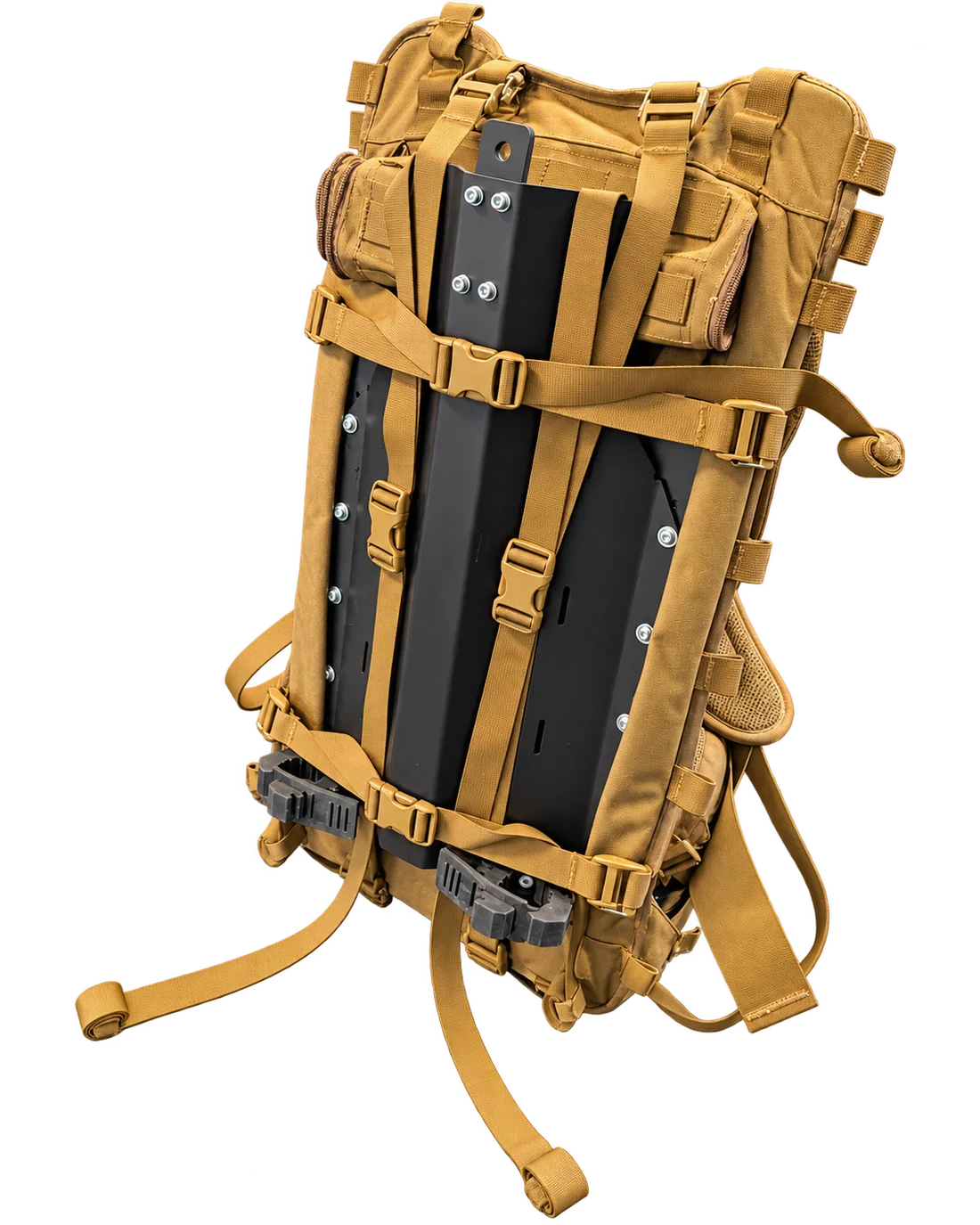
The aircrew vest shown here is one example. The crew needed ballistic protection that works under a seat harness, with a low profile on the chest and pockets that take the armour package they already had.
- Requirement workshop with the end users.
- Pattern design and plate pocket geometry in-house.
- First sample in the final fabric, camouflage and hardware.
- Fit and wear test with the people who will use it.
A carrier for a weapon no carrier was made for.
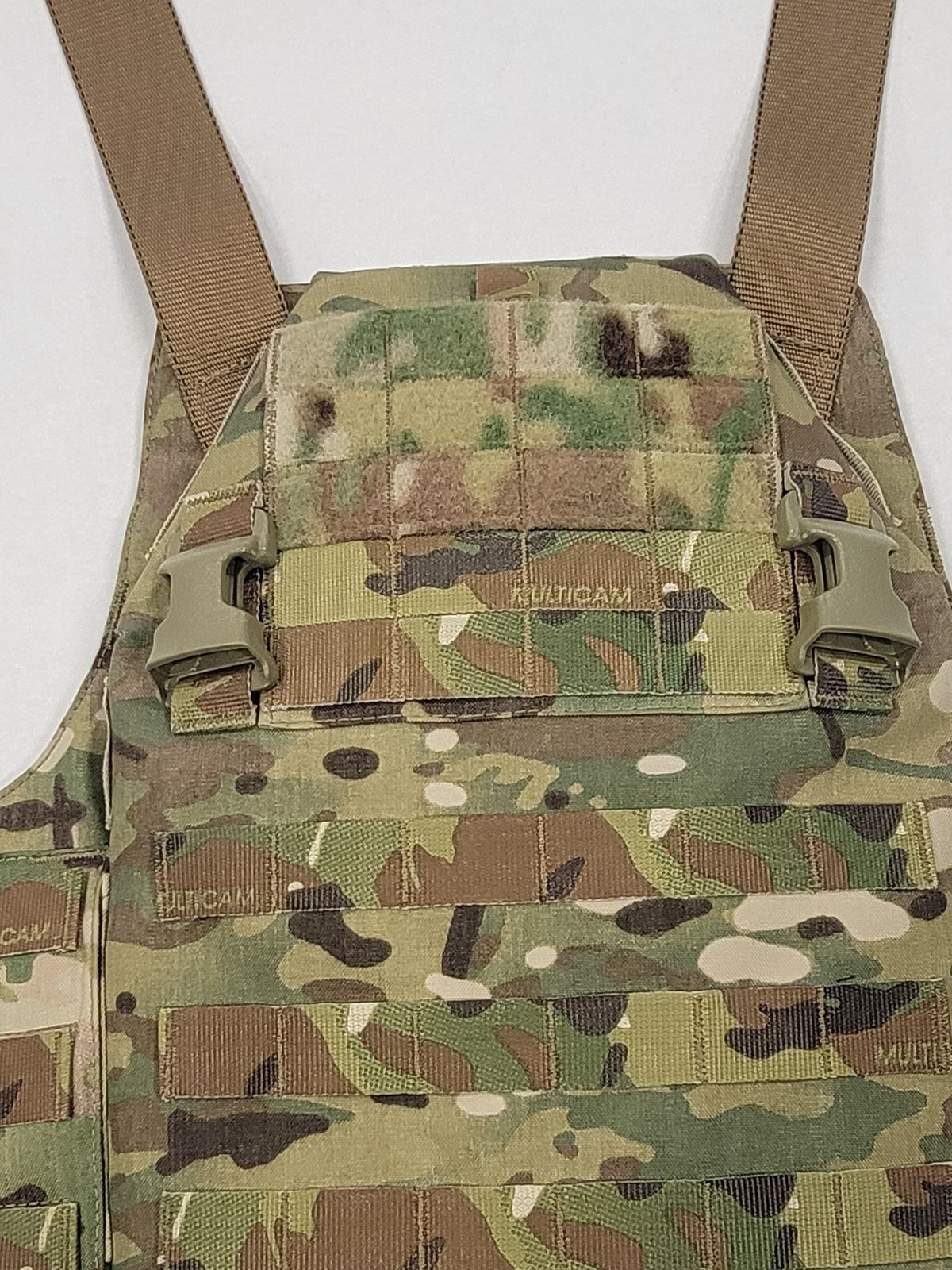
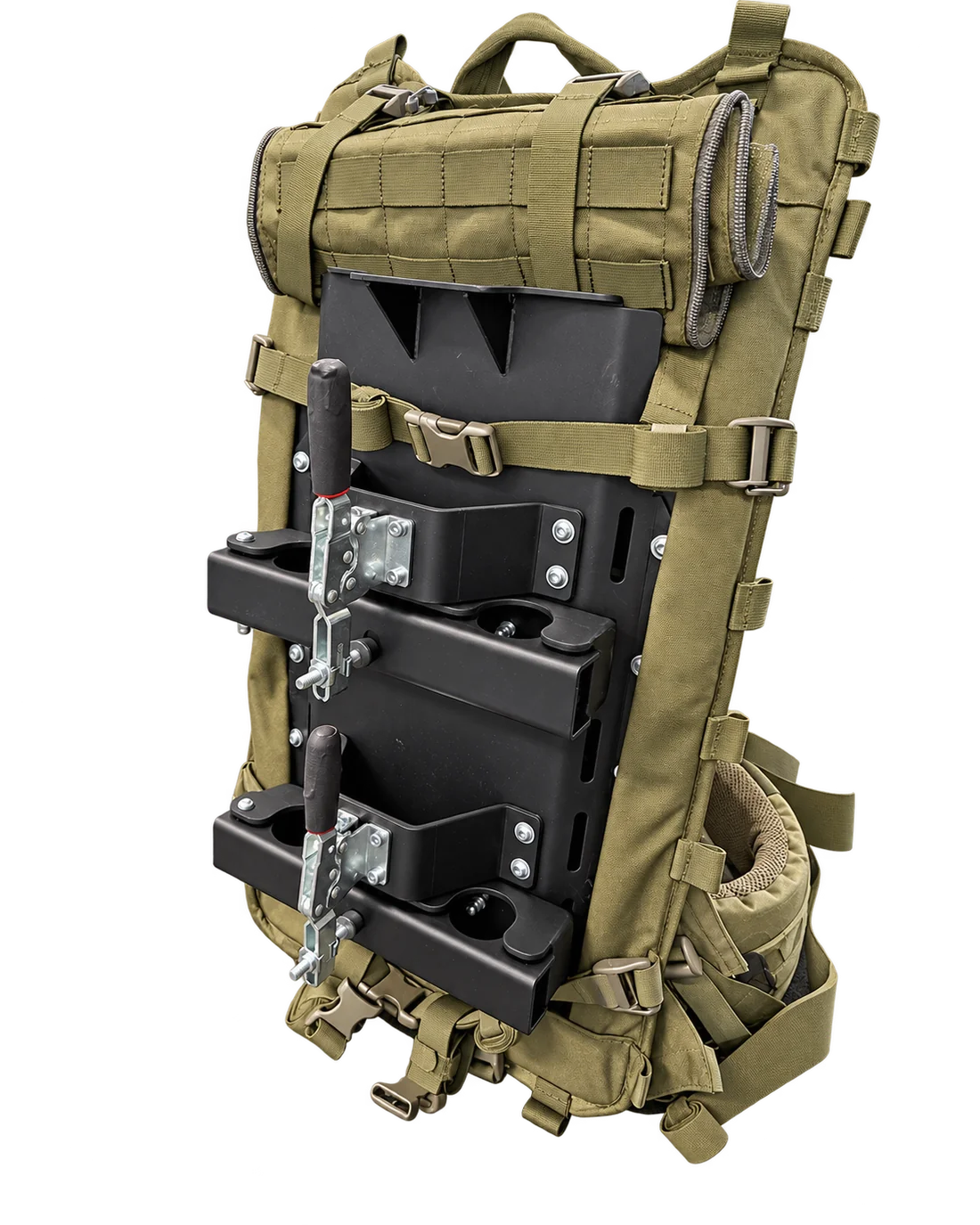
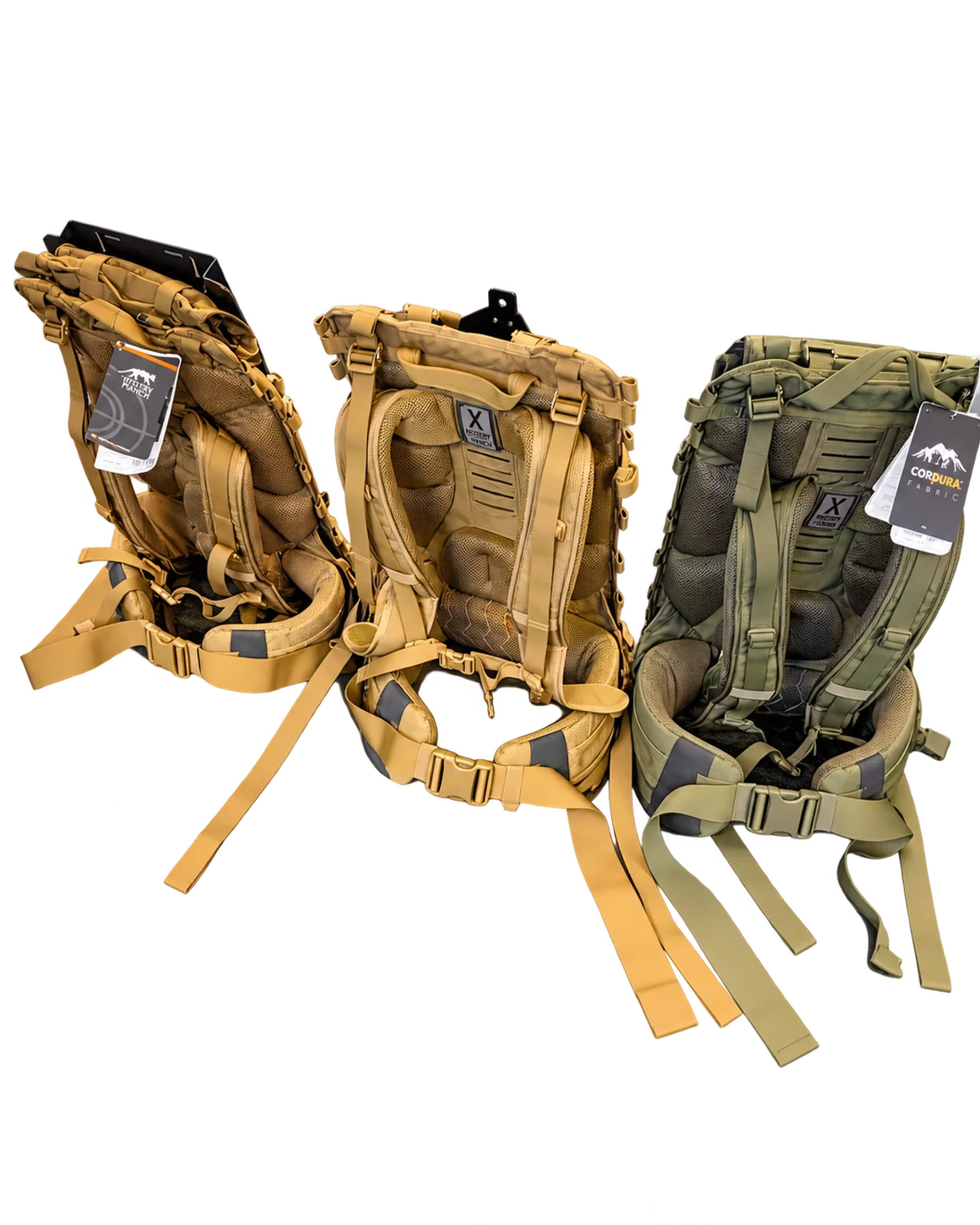
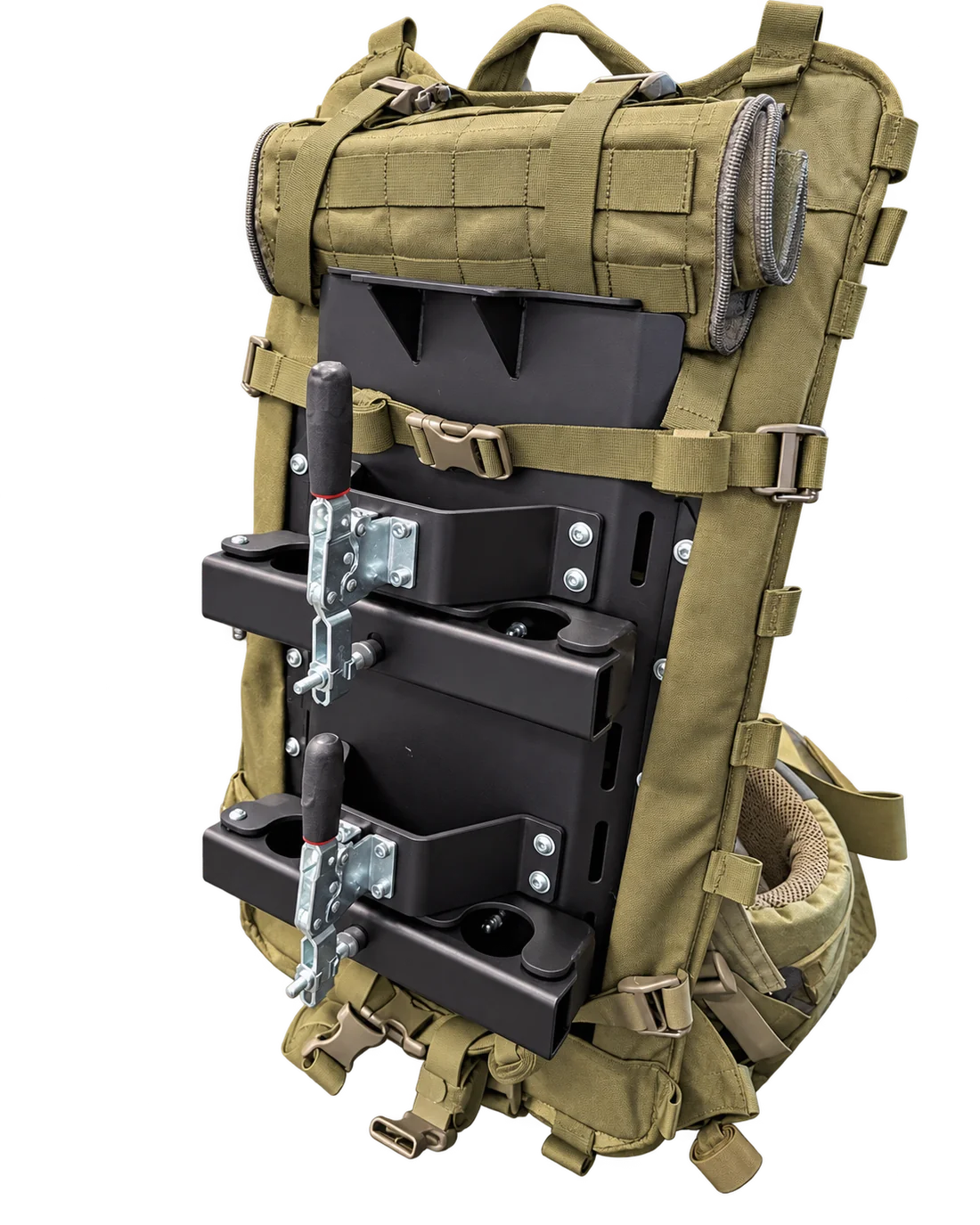
Some loads do not fit any load carriage system on the market. For a .50 calibre weapon system we designed a specialist carrier: a commercial pack frame and harness, which the user already knew and trusted, combined with a steel mounting plate and quick-release clamps engineered by us.
The textile and the metalwork are designed together. The straps route around the plate, the clamps sit where a gloved hand finds them, and the weight is carried on the hip belt instead of the shoulders. Because the base is a production frame, spares and sizing stay simple.
This is what our electromechanical and textile teams do when they work on one product: the sewing and the CNC parts come from the same drawing.
- Proven commercial frame and harness as the base.
- Steel mounting plate with toggle clamps, designed and made in-house.
- Strap routing and buckle positions worked out on the real load.
- Delivered in coyote brown and ranger green to match the unit's kit.
Make what you already own work with what is new.
A new carrier rarely arrives in an empty locker. Pouches, radios, cummerbunds and armour inserts from the previous generation have to keep working, or a unit ends up buying everything twice.
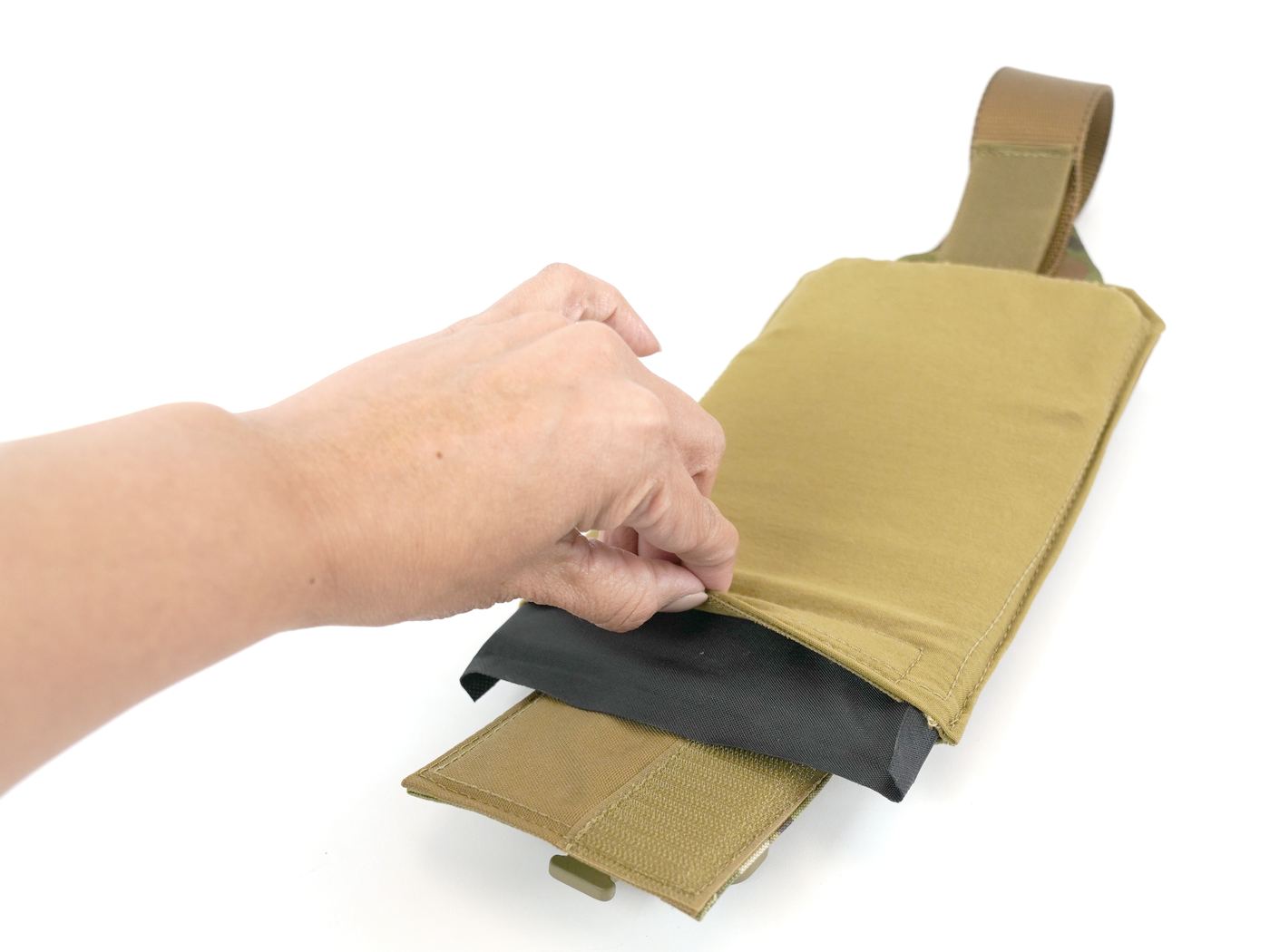
We alter existing textile equipment in our own workshop: a plate pocket resized for a different plate profile, a soft armour pocket added or re-cut, webbing or buckles replaced, a cummerbund shortened, a hydration or cable route added. The result is the same piece of kit, fitted to the new system.
For armour this is precision work. The pocket has to hold the ballistic package flat and in place, at the right height, in every carrier size. We check that on the body, not only on the table.
- Plate and soft armour pockets re-cut for a new package.
- Webbing, buckles and quick-release hardware replaced.
- Legacy pouches and panels adapted to the new carrier.
- Repairs and sustainment of equipment in service.
Five steps from requirement to issued kit.
The same route for a one-off carrier and for a series: short, with your users in the loop at every fitting.
- 1
Requirement
We sit down with the users and write down the role, the load, the threat and the equipment that has to stay in use.
- 2
Measure
We measure your people on location and translate the measurements into sizes and a size distribution.
- 3
Design and prototype
Our engineers draw the pattern and the hardware; our workshop sews the first sample in the final materials.
- 4
Fit and adjust
Fitting sessions on location. What does not sit right is changed on the sample before the series is cut.
- 5
Produce and sustain
Series production in-house or with our partners, followed by alterations, repairs and spares for the life of the kit.
Textile, ballistic and the hardware in between.
Most requests fall into one of these groups. Many projects combine two or three of them.
Carriers and vests
Plate carriers, aircrew and vehicle crew vests, low-visibility carriers and chest rigs, designed from our own patterns or built on a carrier you already field.
Ballistic integration
Plate pockets, soft armour pockets and cummerbunds cut for the exact armour package, so the protection sits where it should in every size.
Load carriage and mounts
Frames, harnesses and mounting plates for weapons, radios, batteries and sensors that no standard pouch or pack was made for.
Fit and cut
Male and female cuts, sizes outside the standard range, and adjustments for seated work, harnesses and body-worn equipment.
Legacy equipment
Alterations that keep pouches, panels and inserts from the previous generation working with the new system.
Colours and materials
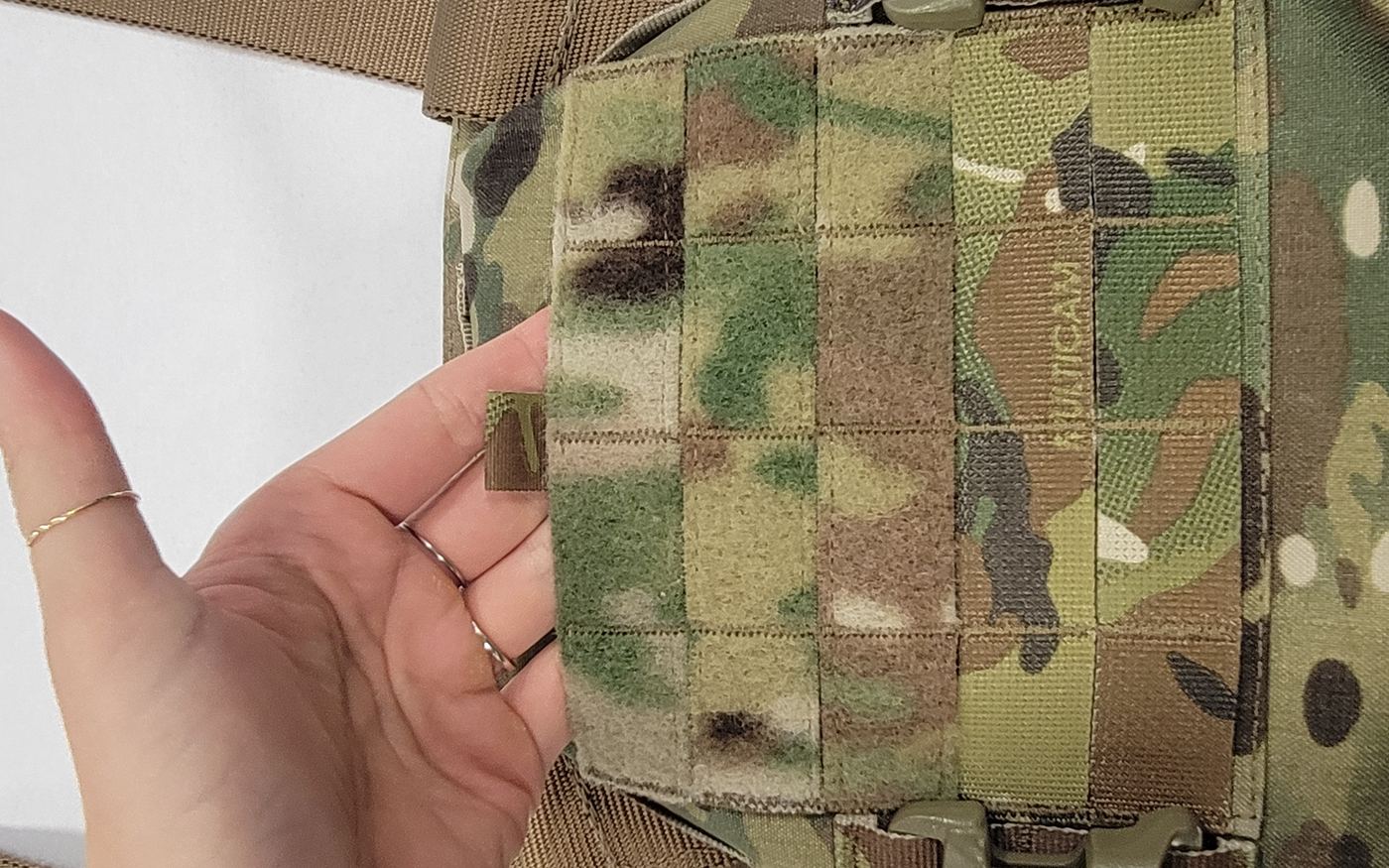
The same design in MultiCam, coyote brown, ranger green or black, in 500 denier Cordura® or the fabric the role asks for.
Two projects, one way of working.
The specialist carrier for a .50 calibre weapon and the aircrew vest development, both designed, prototyped and fitted by Profile Equipment.
Questions we get asked.
Can you integrate the armour package we already have?
Yes. We cut the plate and soft armour pockets to the exact dimensions of your package and check the position on the body during the fitting. Ask us for the test data that goes with your protection requirement.
How small can a project be?
An alteration can be a single carrier. A new design makes sense from a handful of samples for one team up to a series for a unit; the route is the same, only the production step scales.
Where does the work happen?
Design, prototyping, sewing and the metal parts are done in-house in the Netherlands. Measuring and fitting sessions take place on location with your people.
What do we need to bring to a first meeting?
The role, the load and the equipment that has to stay in use. A worn example of the current kit and the armour package help, and if there is a formal requirement we work from that.
Tell us what the catalogue does not cover.
Describe the role, the load and the people who carry it. We measure, design, prototype and fit, and we alter what you already own so it keeps working.
Talk to our gear team