
Profile Equipment
High-tech
Counter-UAS training · by ATMARAKSI

Learn to shoot down FPV drones before you meet one.

A VR trainer for the lead shot with a shotgun. One desk, one headset, one full-weight replica.

Fibre-optic FPV drones do not care about jamming. When electronic warfare fails, the last line of defence is a soldier with a shotgun who has a few seconds to hit a small, fast target. That shot can be trained.

The counter-FPV trainer from the Ukrainian developer ATMARAKSI puts the shooter in a virtual trench or open field with a full-size, full-weight shotgun replica and sends drones at him, again and again, until the lead shot is a reflex.

Request a demonstration
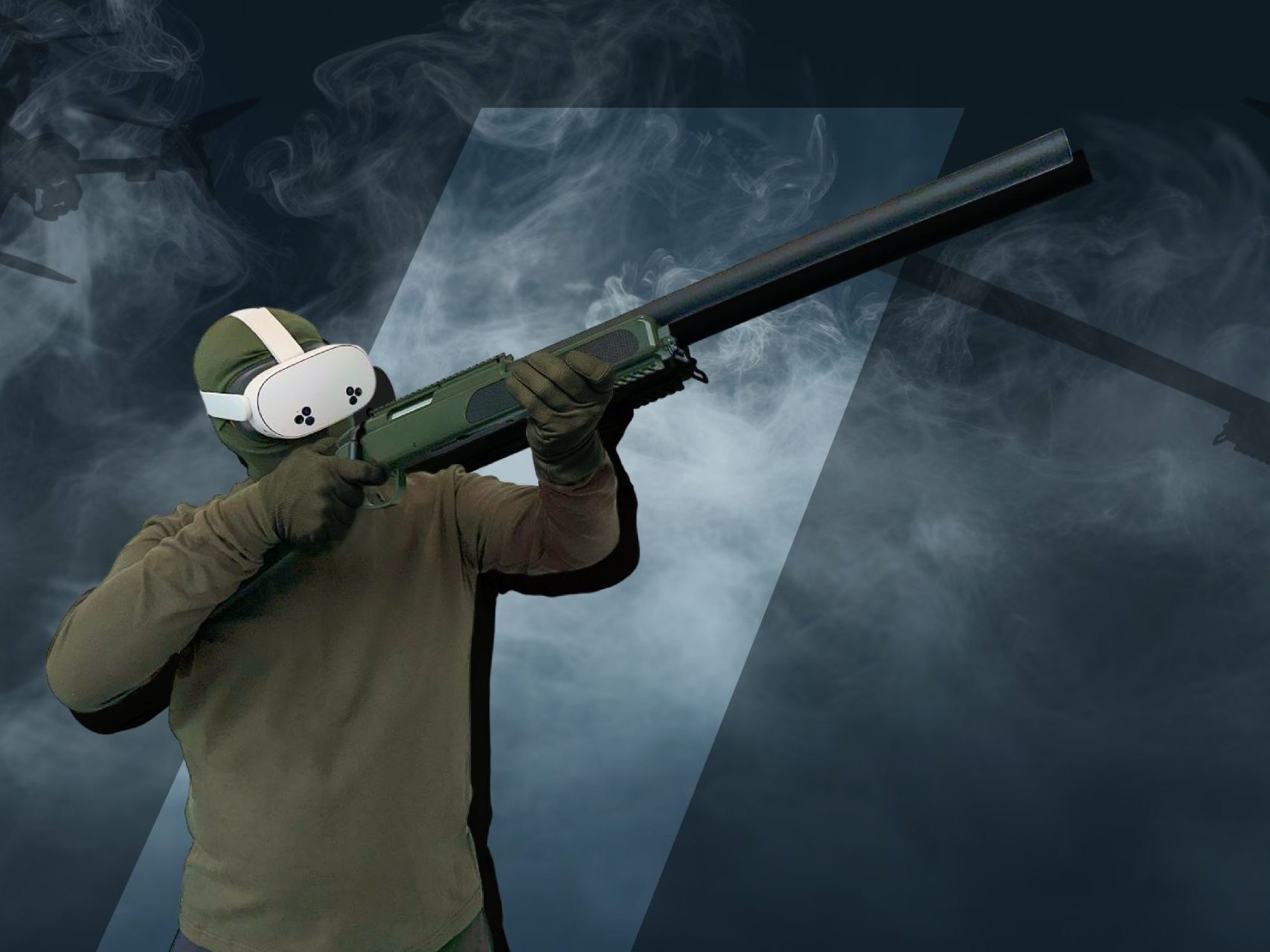
Soldier wearing a VR headset aiming a training shotgun, with FPV drones in the smoke around him
1,000
FPV drones shot down in a 14-day programme
15 min
training per day, per shooter
10–15 min
to set the system up, turnkey
3 × 3 m
room is all the space it needs
25–50 m
effective range the shooter learns to work in
0
live rounds and real drones used
Why it exists

The cheapest answer to an FPV drone is a trained shot.

According to the developer, more than 40% of frontline engagements now involve FPV drones, and the veterans who helped build the trainer name one countermeasure as the most effective at close range: a shotgun loaded with buckshot, with five rounds or more in the magazine.

The difficulty is the shot itself. The target is 7 to 10 inches across, changes speed and direction, and has to be led. Shooters must learn to hold fire until the drone is inside 50 to 60 metres and to manage their ammunition while more drones come in. Under stress, that only works when it has been done many times before.

The trainer is developed together with military instructors and combat veterans who have countered FPV drones themselves, for anyone who may find himself within 30 km of the front line.

  • Trains the lead shot on small, fast, manoeuvring targets.
  • Teaches fire discipline: range, timing and ammunition management.
  • Builds the reflex in conditions close to combat, without the risk.
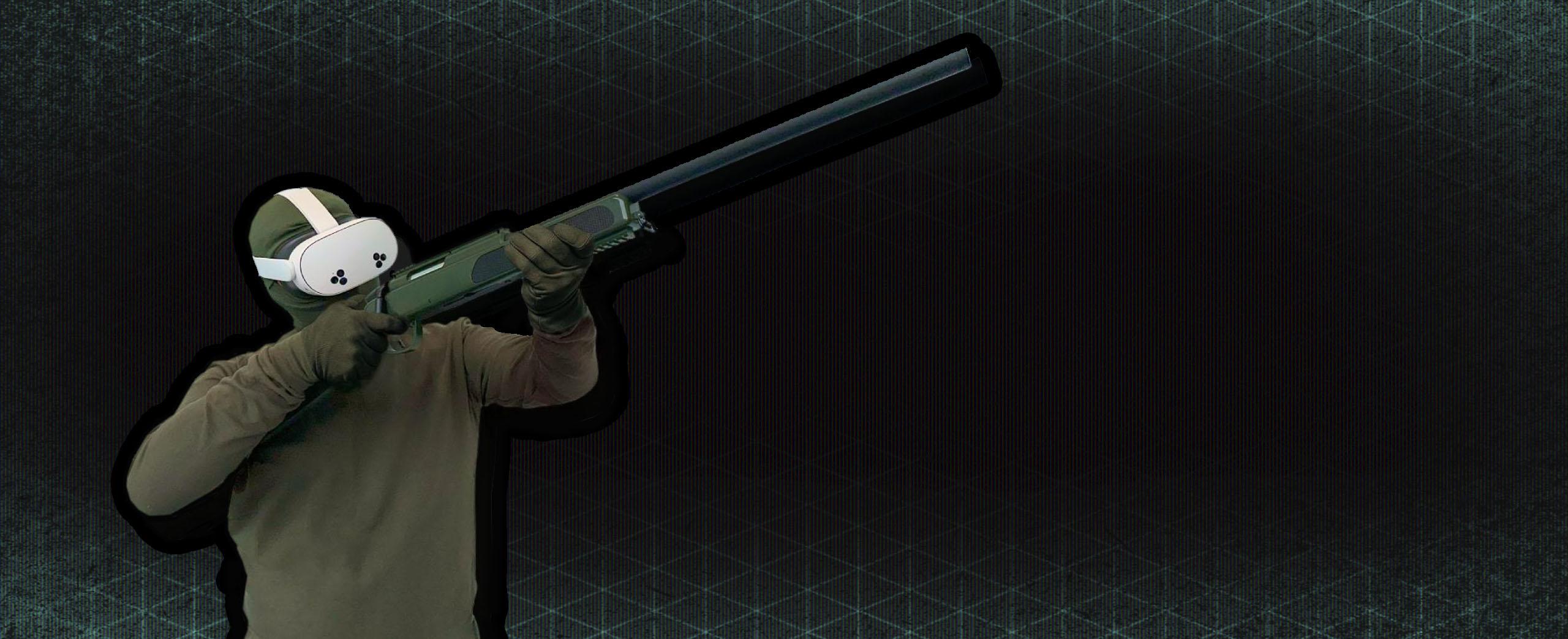
Shooter with VR headset and training shotgun in the aiming position
How it trains

Sight, sound and the weight of the weapon.

The shooter sees a full 3D environment with dynamic lighting, hears the drones, the gunfire and the explosions, and holds a full-size replica calibrated to the weight of the real weapon. A bare VR controller would not do: a shift of 2 mm at the hand moves the aiming line 5 to 7 metres at the target, and without the weight there is no muscle memory to build.

Scenarios run in trenches and open fields, with attacks from different directions. A trajectory constructor lets the instructor draw any flight path. The trainee only handles the weapon; everything else is set at the instructor's workstation.

  • Trenches and open field, attacks from any direction.
  • FPV drones of 7–10 inch at varying speeds.
  • Trajectory constructor for custom flight paths.
  • Instructors are trained in 15 to 30 minutes.
What you get

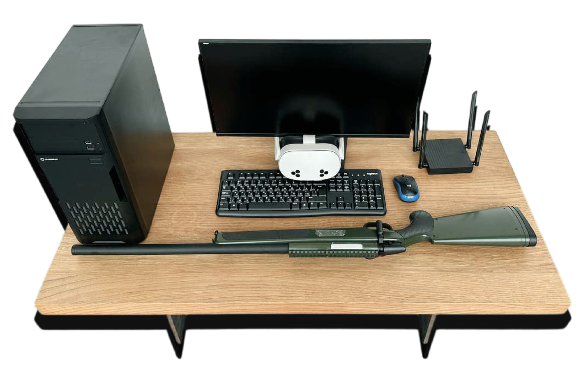
The whole system fits on one desk.

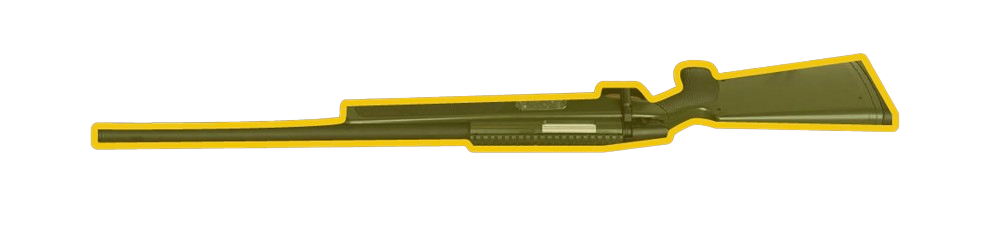
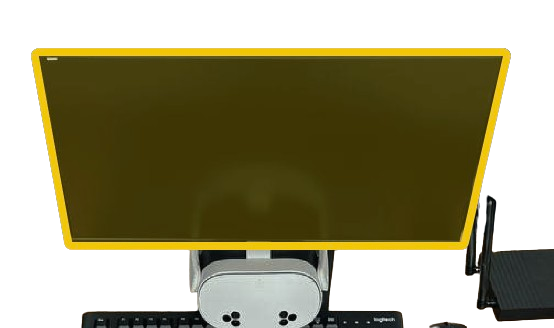
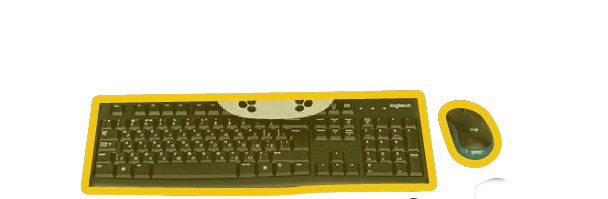
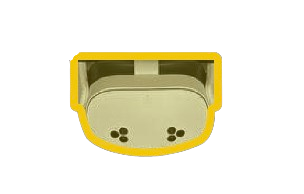
No range, no projector hall, no drone operators. Point at a component to see where it sits in the kit.

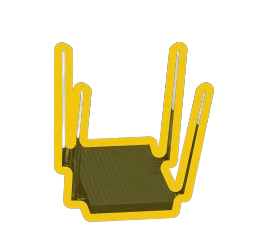
The complete trainer kit on a desk: PC, monitor, VR headset, keyboard and mouse, Wi-Fi router and the training shotgun

Deployment time 10–15 min

Instructor controls

Make it easy first. Then take the help away.

Every aid can be switched on or off from the instructor's workstation, so a session grows with the shooter: from seeing why a shot missed to a mass attack with nothing but the bead to aim with.

Number of drones and intervals

From a single attacker to a mass assault, with the time between drones set by the instructor.

Lead point highlighting

Shows where the shot should go, until the shooter no longer needs to be shown.

Shot direction and aiming line

Makes visible where the barrel actually pointed when the trigger was pulled.

Pellet spread pattern

Displays the pattern of the shot at the target's distance, so range judgement becomes concrete.

Combat sound

Drones, gunfire and explosions add the pressure a quiet range never has.

Trajectory constructor

Any flight path, drawn by the instructor, repeated as often as needed.

Growing with the threat

One platform, extended as the fight changes.

The base system is the shotgun trainer. The developer keeps building on the same platform; tell us what you need to train and we check what is available.

01

Scenario library

Trenches, open fields and custom trajectories today, with drone sizes and speeds adjustable per session.

02

Duel mode: pilot against shooter

Announced by the developer in November 2025: a real FPV pilot flies against the shooter in one shared virtual scene, with session logging and analysis. Availability on request.

03

More weapons on the same technology

ATMARAKSI builds related trainers for air-defence machine guns, the RPG-7 and small arms, for units that want one family of simulators.

Why it pays off

A thousand engagements for the price of none.

The programme

1 simulator. 14 days. 15 minutes a day.

The supplier's training programme has each shooter bring down 1,000 FPV drones in two weeks of short daily sessions. After that many repetitions the reaction is automatic: the shooter no longer hesitates.

A mistake in the simulator costs nothing. The same mistake at the front is paid for differently.

1,000
drones per shooter
14 days
programme length
15 min
per day
The alternative

What the same training costs with real drones.

A single field exercise uses more than 50 drones at about $500 each, plus ammunition, a range, logistics, instructors and drone operators. The supplier puts conventional training for 20 soldiers at $79,000 to $112,000, and the simulator at tens of times less.

The trainer also works where a live exercise cannot: indoors, on base, in any weather, as often as the schedule allows.

50+
real drones per field exercise
$500
per drone, approximately
See it work

The trainer in use.

Footage from the developer.

ATMARAKSI: FPV drone countermeasures training simulator.
ATMARAKSI: shooting down FPV drones with a shotgun (Ukrainian).
FAQ

Questions we get asked.

Why a replica weapon instead of a VR controller?

Because aiming a long gun is a matter of millimetres. A 2 mm shift at the hand moves the aiming line 5 to 7 metres at the target, and without the real weight and length there is no muscle memory to carry over to the real shotgun.

How much space and preparation does it need?

A room of 3 × 3 metres. The kit is delivered turnkey and is set up in 10 to 15 minutes. It runs on its own, without an external network.

Who operates it?

An instructor at the workstation sets the scenario and the aids; the trainee only handles the weapon. Instructors learn the system in 15 to 30 minutes.

Does it replace live firing?

No. It builds the lead, the timing and the fire discipline first, so that the live rounds and real drones you do use confirm a skill instead of teaching it.

Can scenarios be adapted to our situation?

Yes. The instructor sets the number of drones, the intervals and the flight paths, and the trajectory constructor allows any approach to be drawn and repeated.

Give your people a thousand tries before the first real one.

Tell us who needs to be trained and where. We arrange a demonstration and discuss the configuration.

Request a demonstration